
Meta Description:
Discover how Agricultural Engineering is revolutionizing farming through innovation, sustainability, and modern technology. Learn its importance, branches, and career opportunities.
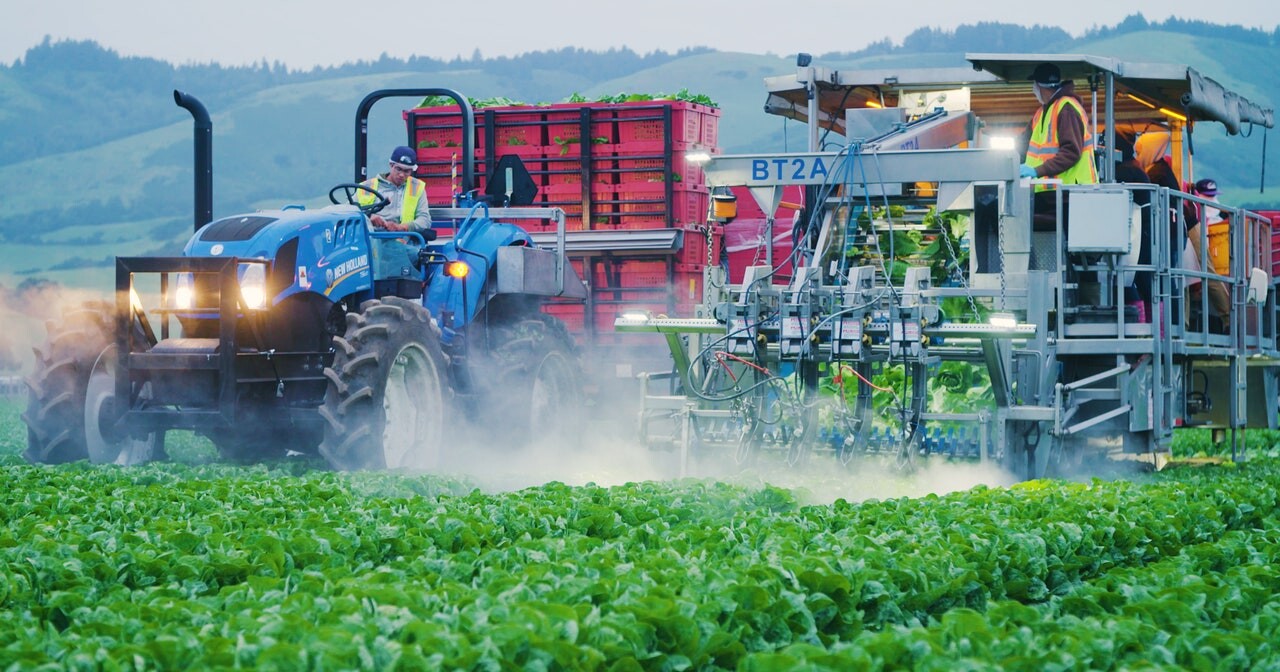
Table of Contents
🌾 Introduction to Agricultural Engineering
Agricultural Engineering is the branch of engineering that applies scientific principles, technology, and innovation to agriculture. It focuses on improving farming efficiency, productivity, and sustainability through the design and development of advanced tools, machinery, and systems. From modern irrigation and soil management to automation, renewable energy, and food processing, agricultural engineers play a vital role in feeding the world while protecting the environment. This field bridges the gap between traditional farming and cutting-edge technology, shaping the future of sustainable agriculture. In today’s world, where food security and sustainability are global priorities, Agricultural Engineering plays a crucial role. It bridges technology, environment, and biology to make farming more efficient, sustainable, and profitable.
This article explores what Agricultural Engineering is, why it matters, and how it shapes the future of agriculture worldwide.
🌱 What Is Agricultural Engineering?
Agricultural Engineering is a multidisciplinary branch of engineering that integrates technology, science, and agriculture to improve farming efficiency, sustainability, and productivity.
It combines the principles of mechanical, civil, electrical, environmental, and chemical engineering to design and develop tools, machines, structures, and processes that help farmers produce food more efficiently.
In simple terms, it bridges the gap between modern technology and traditional farming. It focuses on developing innovative solutions for problems related to soil management, irrigation, crop production, renewable energy, and environmental protection.
Modern agricultural engineers work on:
- Designing advanced farm machinery
- Developing smart irrigation systems
- Creating sustainable farming methods
- Innovating renewable energy systems for agriculture
🌾 The Importance of Agricultural Engineering
Engineering in Agriculture plays a vital role in feeding the world sustainably. With the global population expected to reach 10 billion by 2050, the demand for food will increase dramatically — but natural resources like water and arable land are limited.
Here’s why it’s so important:
🌍 1. Ensures Food Security
Agricultural engineers design systems that increase food production and reduce post-harvest losses. Precision farming, crop monitoring, and mechanized systems ensure consistent yields.
💧 2. Improves Water Management
Efficient irrigation systems such as drip irrigation and sprinkler systems are the result of agricultural engineering innovations. These technologies help farmers save water and improve crop health.
🌱 3. Promotes Sustainable Agriculture
By using renewable energy, eco-friendly machinery, and soil conservation techniques, engineering in agriculture helps minimize the environmental impact of farming.
⚙️ 4. Boosts Productivity and Efficiency
Automated machinery and smart systems reduce human effort, speed up tasks, and ensure precision — from planting to harvesting.
📈 5. Supports Rural Development
Engineering innovations bring modern facilities, jobs, and training opportunities to rural areas, improving local economies.
🌿 7 Key Branches of Agricultural Engineering
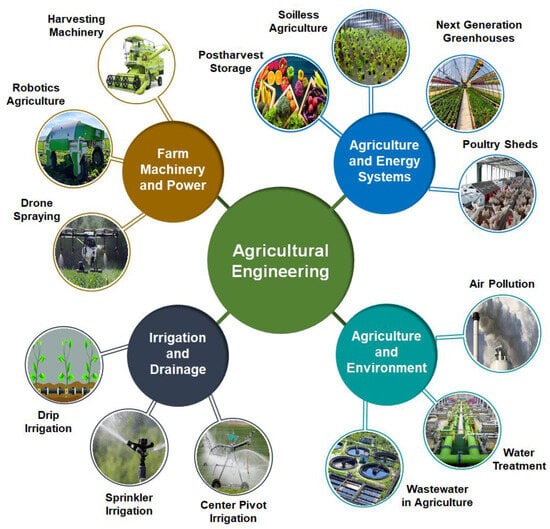
Agricultural Engineering covers many specialized fields. Here are the 7 main branches that shape the modern farming landscape:
1. Farm Machinery and Power Engineering
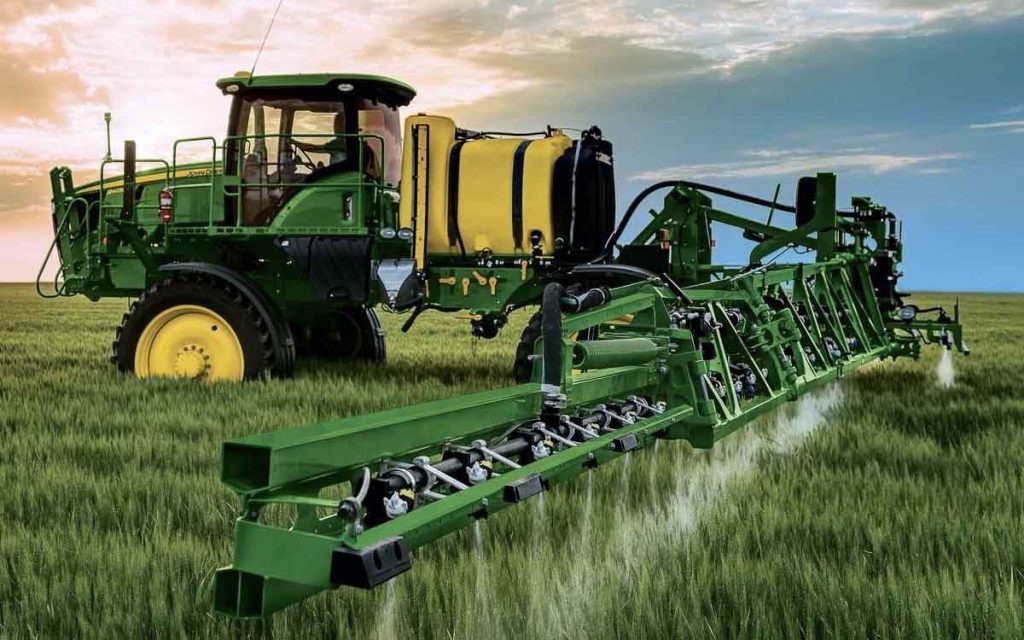
This branch focuses on designing, testing, and maintaining agricultural machines — such as tractors, harvesters, seeders, and plows — to maximize productivity and minimize labor.
2. Soil and Water Engineering
Engineers in this field design irrigation systems, drainage networks, and watershed structures to manage soil moisture and ensure sustainable land use.
3. Food Process Engineering
This branch ensures food safety and quality by designing systems for processing, packaging, and storing agricultural products efficiently.
4. Agricultural Structures and Environmental Control
It deals with the design of farm buildings, greenhouses, and animal housing systems that provide suitable environments for crops and livestock.
5. Renewable Energy in Agriculture
Engineers work with solar, wind, and bioenergy technologies to reduce dependence on fossil fuels in farming operations.
6. Precision Agriculture
This modern field uses drones, GPS, sensors, and data analytics to monitor crops and apply resources only where needed.
7. Agricultural Resource Management
This branch focuses on the sustainable use of land, water, and energy to ensure long-term agricultural productivity.
🚜 Applications of Agricultural Engineering in Modern Farming
Agricultural Engineering is a dynamic and multidisciplinary field that goes far beyond designing machines. It combines engineering principles, technology, and biological sciences to optimize farming systems, improve productivity, and ensure environmental sustainability. From planting seeds to post-harvest management, agricultural engineering transforms the entire farming ecosystem. Modern agriculture is no longer labor-intensive alone; it is increasingly data-driven, automated, and technologically advanced.
🔹 Smart Farming
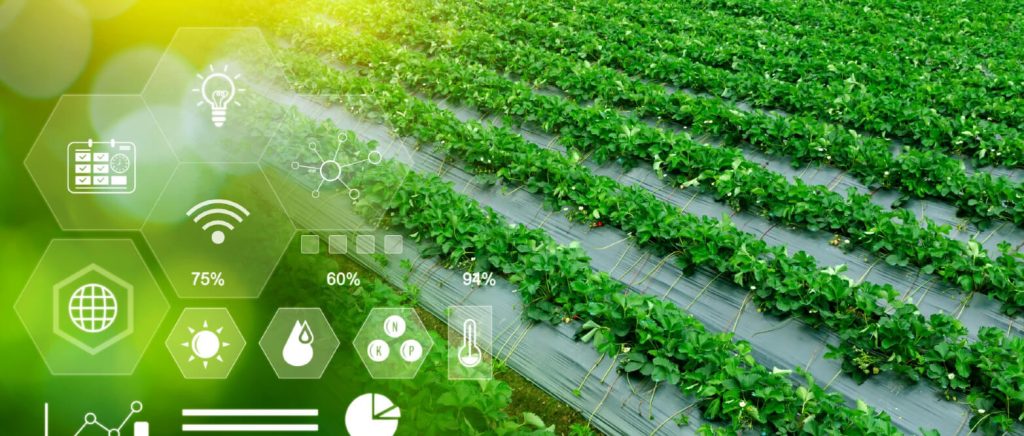
Smart farming leverages technology to monitor and manage crops with precision. Internet of Things (IoT) devices, drones, and satellite imagery allow farmers to track soil health, crop growth, and weather conditions in real-time. Sensors can detect nutrient deficiencies, water stress, or early signs of pest infestations. This data-driven approach ensures timely interventions, reduces resource wastage, and optimizes yields. Smart farming not only increases productivity but also promotes sustainable practices by reducing excessive pesticide and fertilizer use.
🔹 Automated Machinery
Automation is transforming traditional farming practices. Robotic tractors, planters, and harvesters perform tasks with high efficiency and minimal human intervention. These machines plant seeds at optimal depth and spacing, improving crop uniformity. During harvesting, robotic harvesters reduce crop damage and speed up operations. Advanced AI-powered robots can even selectively pick ripe fruits and vegetables, ensuring quality while reducing labor dependency. Automation is particularly valuable in regions facing labor shortages and rising wage costs.
🔹 Irrigation and Water Conservation
Water is one of the most vital resources for agriculture. Efficient water management is crucial for sustainable farming. Smart irrigation systems use soil moisture data and weather forecasts to provide the exact amount of water crops need. Drip irrigation, automated sprinklers, and moisture sensors minimize water waste, save energy, and enhance crop growth. Some systems also incorporate rainwater harvesting and water recycling techniques, allowing farms to operate sustainably even in water-scarce regions.
🔹 Post-Harvest Management
Engineering solutions are essential beyond crop production. Post-harvest losses, caused by spoilage, poor storage, or transportation, can be significant. Modern agricultural engineering provides solutions like temperature- and humidity-controlled storage, mechanical sorting, and automated packaging systems. These innovations preserve food quality, extend shelf life, and reduce economic losses. Advanced processing techniques such as dehydration, cold storage, and vacuum packaging also allow perishable crops to reach distant markets without losing freshness.
🔹 Renewable Energy Integration
Energy consumption is a critical factor in modern farming. Agricultural engineering increasingly incorporates renewable energy sources, including solar-powered irrigation pumps, wind turbines, and biogas plants. These technologies reduce reliance on fossil fuels, lower operational costs, and provide sustainable energy for off-grid or remote farms. Renewable energy integration not only improves the farm’s economic viability but also reduces the environmental footprint of agriculture.
🔹 Soil and Environmental Management
Sustainable farming requires maintaining healthy soil and ecosystems. Agricultural engineers develop techniques for soil conservation, nutrient management, and erosion control. Precision nutrient application ensures crops receive the right amount of fertilizer at the right time, preventing overuse and reducing pollution. Soil testing, contour farming, and terracing are other methods used to prevent erosion and maintain long-term soil fertility. These practices balance productivity with ecological responsibility.
💡 Top Technologies Used in Agricultural Engineering
- Drones – Monitor crops, map fields, and spray pesticides accurately.
- GPS & GIS Systems – Enable precise navigation for machinery and efficient land management.
- IoT Sensors – Track soil moisture, nutrients, and weather conditions in real-time.
- AI & Machine Learning – Analyze farm data, predict yields, and optimize decision-making.
- Robotics – Automate planting, harvesting, and packaging, saving time and labor.
- Biotechnology – Develop crops with improved resistance to pests, diseases, and environmental stress while increasing yield.
- Renewable Energy – Solar, wind, and biogas systems power irrigation, storage, and processing sustainably.
🎓 Career Opportunities in Agricultural Engineering
Agricultural Engineering offers diverse and rewarding career paths across public, private, and research sectors.
🔧 1. Design and Manufacturing
One of the most prominent career paths in agricultural engineering is design and manufacturing. Engineers in this area work with companies that develop, design, and produce agricultural machinery and equipment. This includes tractors, plows, harvesters, irrigation systems, and precision farming devices. Professionals in this field focus on innovation to improve efficiency, reduce labor, and optimize crop production.
Engineers may also be involved in prototyping new machines, testing them under real-world farm conditions, and refining designs based on performance. With the rise of automation and robotics, agricultural engineers are increasingly creating advanced machines like autonomous tractors and robotic harvesters. Working in this sector combines mechanical engineering skills with agricultural knowledge, and it often involves collaboration with software engineers, material scientists, and agricultural specialists.
Career roles in design and manufacturing can include mechanical design engineer, agricultural equipment specialist, automation engineer, and product development engineer. These roles are critical to modern agriculture because efficient machinery directly impacts productivity, reduces operational costs, and ensures sustainable farming practices.
🌿 2. Irrigation and Water Management
Water is one of the most crucial resources in agriculture, and managing it effectively is essential for sustainable farming. Agricultural engineers in irrigation and water management design, implement, and maintain systems that deliver water efficiently to crops. This includes drip irrigation, sprinklers, canal systems, and smart irrigation technologies that use sensors and automation to optimize water use.
Professionals in this field also work on water conservation projects, rainwater harvesting systems, and groundwater management strategies. They study soil-water interactions, climate patterns, and crop water requirements to ensure that farms maximize productivity while minimizing water waste.
Career opportunities include irrigation engineer, water resources specialist, hydraulic systems designer, and environmental water management consultant. These roles are increasingly important in regions facing water scarcity or changing climate conditions. Engineers in this field play a direct role in promoting sustainable agriculture and supporting communities with limited water resources.
🧪 3. Food Processing and Quality Control
Agricultural engineers are also vital in the food processing and quality control sector. Here, they ensure that raw agricultural products are processed, packaged, and stored in ways that maintain safety, quality, and nutritional value. This includes working in dairy, grain, meat, and fruit processing industries.
Engineers in this area design processing equipment, monitor production lines, and implement safety protocols to meet national and international standards. They also optimize processes for energy efficiency, cost-effectiveness, and minimal environmental impact. Quality control professionals check for contamination, spoilage, or defects, ensuring that consumers receive safe and high-quality food products.
Career roles include food processing engineer, quality control specialist, packaging engineer, and food safety consultant. This sector is particularly relevant today as the demand for safe, nutritious, and high-quality food continues to grow worldwide. Agricultural engineers in food processing bridge the gap between farm production and consumer consumption.
🏗️ 4. Infrastructure Development
Agricultural engineers often work in infrastructure development, focusing on building facilities that support farming operations and rural communities. This includes storage facilities, silos, greenhouses, irrigation canals, and rural roads. Proper infrastructure reduces post-harvest losses, improves market access, and ensures that agricultural production is efficient and sustainable.
Engineers in this field design structures that withstand environmental stress, optimize resource use, and enhance productivity. For example, modern storage systems incorporate temperature and humidity control to prevent spoilage, while greenhouses allow controlled-environment agriculture for high-value crops.
Career opportunities include agricultural infrastructure engineer, civil engineer for rural development, greenhouse designer, and storage systems specialist. Infrastructure development is crucial in enhancing the efficiency of entire agricultural supply chains and supporting rural economies.
🧭 5. Research and Academia
For those interested in innovation and knowledge creation, research and academia offer an exciting career path. Agricultural engineers in research institutions and universities study sustainable farming practices, climate adaptation, soil and water conservation, precision agriculture, and new technologies.
Research can involve developing drought-resistant crops, designing autonomous machinery, or creating data-driven models to optimize resource use. Academic roles also include teaching future agricultural engineers, writing scientific publications, and collaborating with government or international agencies on agricultural projects.
Career roles in research and academia include research scientist, professor, agricultural consultant, and technology analyst. This career path allows professionals to make a long-term impact on agricultural sustainability, technological advancement, and global food security.
🌍 6. Government and NGOs
Agricultural engineers play a key role in government programs and non-governmental organizations (NGOs) focused on agricultural development, sustainability, and food security. Professionals may work on projects involving rural development, disaster management, irrigation schemes, or climate adaptation programs.
They may also develop policies, provide technical guidance, and implement initiatives to improve the efficiency and sustainability of farming systems at regional or national levels. Working with NGOs can involve international projects aimed at supporting smallholder farmers, introducing renewable energy technologies, or promoting sustainable land use.
Career opportunities include policy advisor, development project engineer, extension officer, and sustainability consultant. These roles are highly impactful, allowing engineers to contribute directly to societal development and global agricultural challenges.
Top Employers:
- John Deere
- AGCO Corporation
- Government Research Institutes
- FAO, UNDP, and World Bank Projects
- Universities and Agricultural Colleges
⚠️ Challenges Faced by Agricultural Engineers
While technology is advancing, engineers face multiple challenges:
- Climate Change – unpredictable weather affects design and implementation.
- Resource Scarcity – limited water and fertile land.
- High Costs – modern machines and tech are expensive for small farmers.
- Skill Gaps – lack of training and technical knowledge in rural areas.
- Sustainability Issues – balancing productivity with environmental safety.
🌎 The Future of Agricultural Engineering
The future of farming depends heavily on innovation and sustainability.
🔮 Key Future Trends:
- AI-Driven Farming: AI and robotics will automate most farming processes.
- Vertical and Urban Farming: Engineers will design systems for growing food in limited spaces.
- Climate-Smart Agriculture: Adapting farming systems to withstand extreme weather.
- Green Energy Integration: Solar, biogas, and wind power will replace fossil fuels.
- Data-Driven Decision Making: Sensors and analytics will guide real-time farming actions.
As the world embraces the Fourth Industrial Revolution, Agricultural technologies will remain a pillar of global food security and sustainability.
Future Prospects:
The future of agricultural engineering is closely tied to innovations in artificial intelligence, autonomous robotics, biotechnology, and sustainable energy. Smart farms powered by AI algorithms will be able to predict crop diseases, optimize irrigation schedules, and even forecast market demand. Drones and robotic harvesters will further reduce human labor while maximizing efficiency. Biotechnology will continue to enhance crop resilience and nutritional value. Renewable energy solutions will make farms self-sufficient and eco-friendly.
In addition, climate change challenges, population growth, and resource limitations will make agricultural engineering even more critical. Engineers will focus on precision agriculture, vertical farming, hydroponics, and sustainable practices that reduce environmental impact while feeding a growing global population
🌻 Conclusion
Agricultural Engineering is not just about machinery — it’s about shaping a sustainable future for humanity.
From designing intelligent irrigation systems to inventing renewable energy solutions, agricultural engineers ensure that the world’s growing population has access to safe, affordable food without harming the environment.
If you’re passionate about innovation, sustainability, and technology, a career in Agricultural Engineering offers endless opportunities to make a lasting global impact.
FAQs About Agricultural Engineering
1. What is the main purpose of Agricultural Engineering?
It aims to improve farming efficiency, sustainability, and productivity using technology and scientific principles.
2. What are the major branches of Agricultural Engineering?
The key branches include Farm Machinery, Soil and Water Engineering, Food Process Engineering, and Renewable Energy in Agriculture.
3. What technologies are used in modern Agricultural Engineering?
Modern agriculture uses AI, drones, IoT sensors, GPS systems, and robotic automation to enhance precision and sustainability.
4. Is Agricultural Engineering a good career choice?
Yes. With the global push toward sustainable food systems, Engineering in Agriculture offers excellent career opportunities and growth potential.
5. How does Agricultural Engineering help the environment?
It promotes sustainable farming practices, reduces pollution, conserves water, and integrates renewable energy to minimize environmental impact.
ASABE (American Society of Agricultural and Biological Engineers)